
Morild Ship & Bridge
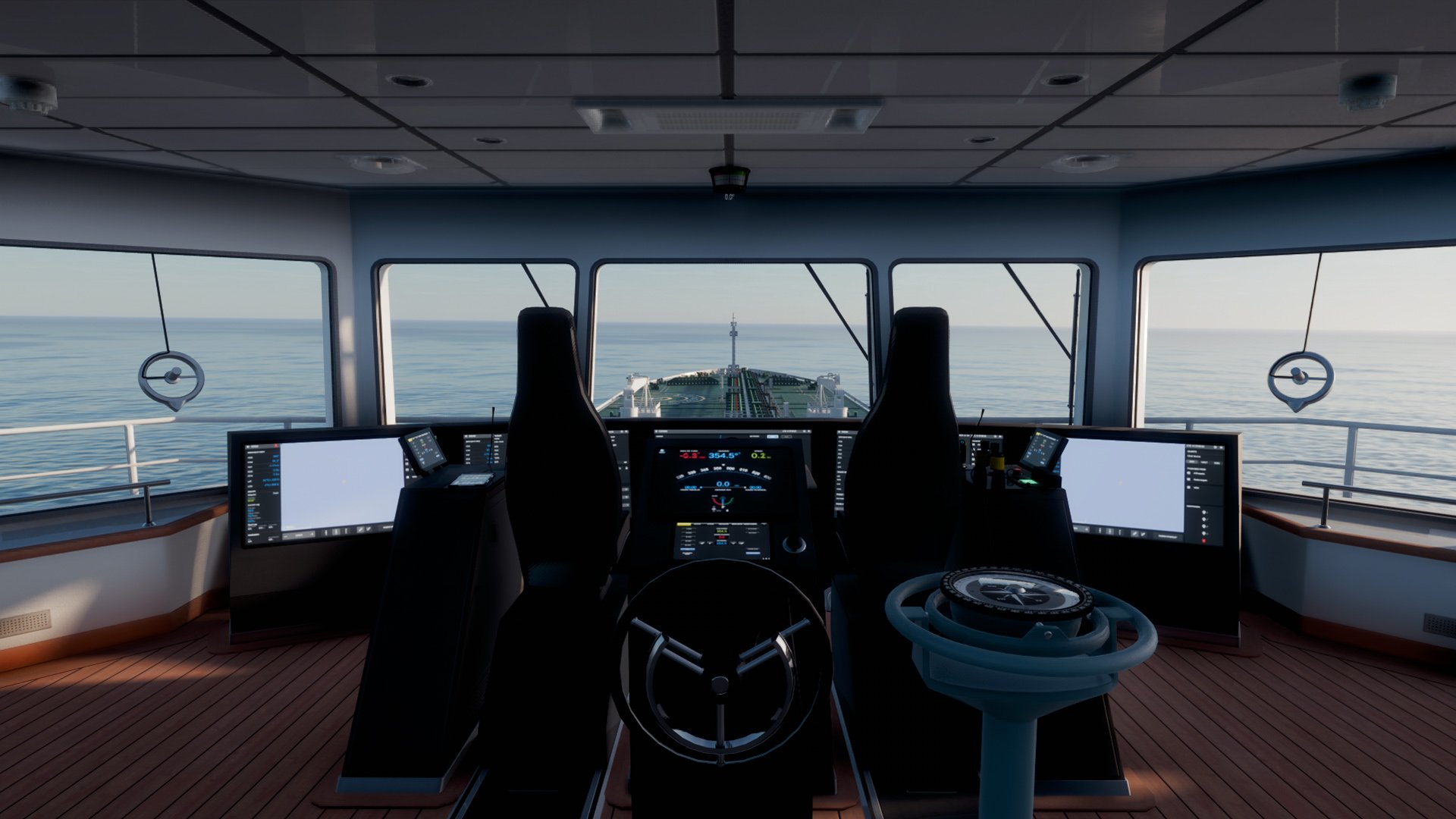
Click image above to watch video
Morild Ship & Bridge is a professional full-mission bridge simulator designed to make high-fidelity simulator training available beyond the conventional simulator center. The complete system runs as one application on a single high-performance PC or laptop, using Virtual Reality to replace the large visual systems and physical bridge installations traditionally associated with full-mission simulators.
This compact architecture enables simulator training to be conducted in-house, onboard, or across multiple locations with participants and instructors connected to the same live scenario. Despite the significantly reduced infrastructure, Morild delivers advanced dynamic vessel physics, high-fidelity real-time visualization, a fully interactive virtual bridge, and integrated navigation and bridge applications for professional maritime training.
Virtual bridge interaction
In Morild Ship & Bridge, bridge controls, displays and equipment are fully virtualized and operated directly within VR. This provides a high degree of flexibility in configuring bridge layouts, equipment and control systems to reflect different vessel types, propulsion arrangements and operational requirements.
Our VR interaction system is designed to make operating the virtual bridge natural and intuitive. Controls and equipment can be interacted with directly, allowing users to concentrate on the training scenario and their operational tasks rather than on learning how to operate the simulator.
Participants are represented by VR avatars within the shared environment, allowing bridge team members to see and interact with each other naturally during multi-user exercises.
Marine pilot training
Norwegian Coastal Administration’s Pilot division training with Morild Ship & Bridge simulator system.
Academic research & industry collaboration
Two independent university studies have evaluated the Morild Ship & Bridge Simulator and found it to perform very favorably compared with advanced conventional simulator systems. These findings are consistent with the positive feedback we receive from users and support our aim of combining high simulation quality with a significantly more cost-effective and accessible system.
Our ongoing collaboration with academia, maritime research institutions, industry professionals and customers contributes directly to the continued development of the simulator. By incorporating research findings, operational experience and user feedback, we continuously refine both the technology and its application to maritime training.
The Morild simulator system is also used in the Arctic University of Tromsø’s onshore operation center (OOC) to support the development of next-generation autonomous maritime systems
Academic research
The Arctic University of Norway, Norwegian University of Science and Technology and University of South-Eastern Norway are using Morild VR Ship & Bridge in their research and studies.
Virtual touch-screen display
Click image above to enlarge
The Morild VR Ship & Bridge Simulator recreates the modern ship bridge as an interactive virtual environment. Bridge displays, controls and equipment can be operated directly in VR, allowing users to interact naturally with the systems required during a training exercise.
Digital bridge applications play a central role in modern ship handling and navigation. Our bridge applications are designed in accordance with the OpenBridge design system and guidelines, providing a consistent and intuitive user interface across the virtual bridge. OpenBridge is specifically developed for maritime and industrial user interfaces, with an emphasis on clarity, consistency and safe operation.
The virtual bridge includes applications such as ECDIS, ARPA Radar, Conning and AUX. Our Conning application is automatically configured according to the vessel and propulsion-system setup defined in the vessel configurator, ensuring that the information and controls presented to the user reflect the vessel being simulated.
Multi-user team training

Tugboats & pilots
Pilots from Lübeck, Germany and tugboat captains from BOLUDA Deutschland GmbH training together in same scenario with bulk carrier and multiple tugboats.
Morild Ship & Bridge supports complex exercises involving multiple participants and independently operated vessels within the same simulation environment. Scenarios can include vessel traffic, ship interaction in restricted waterways, locks, tug and mooring operations, wind and currents, and communication between bridge teams and other vessels.
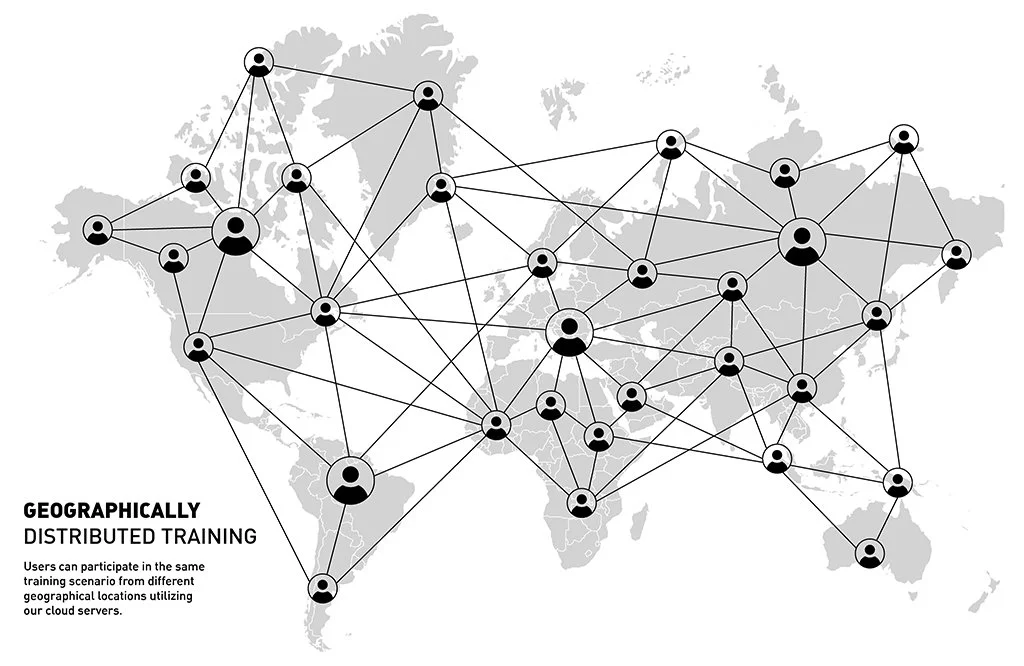
Participants can connect from different geographical locations and operate together within the same live scenario. Instructors can also connect remotely, allowing training to be conducted without requiring all participants and instructors to be physically co-located.
AI-controlled agents can perform selected roles onboard, enabling individual users or incomplete bridge teams to conduct team-based exercises when a complete human crew is not available.
Multi-user sessions can be set up easily over a local network or through the internet using the Morild cloud system. With servers hosted in multiple regions worldwide, the system is designed to provide reliable connectivity, high bandwidth and low latency for distributed simulation sessions. Access to the Morild cloud service is included with the software subscription.
Celestial navigation
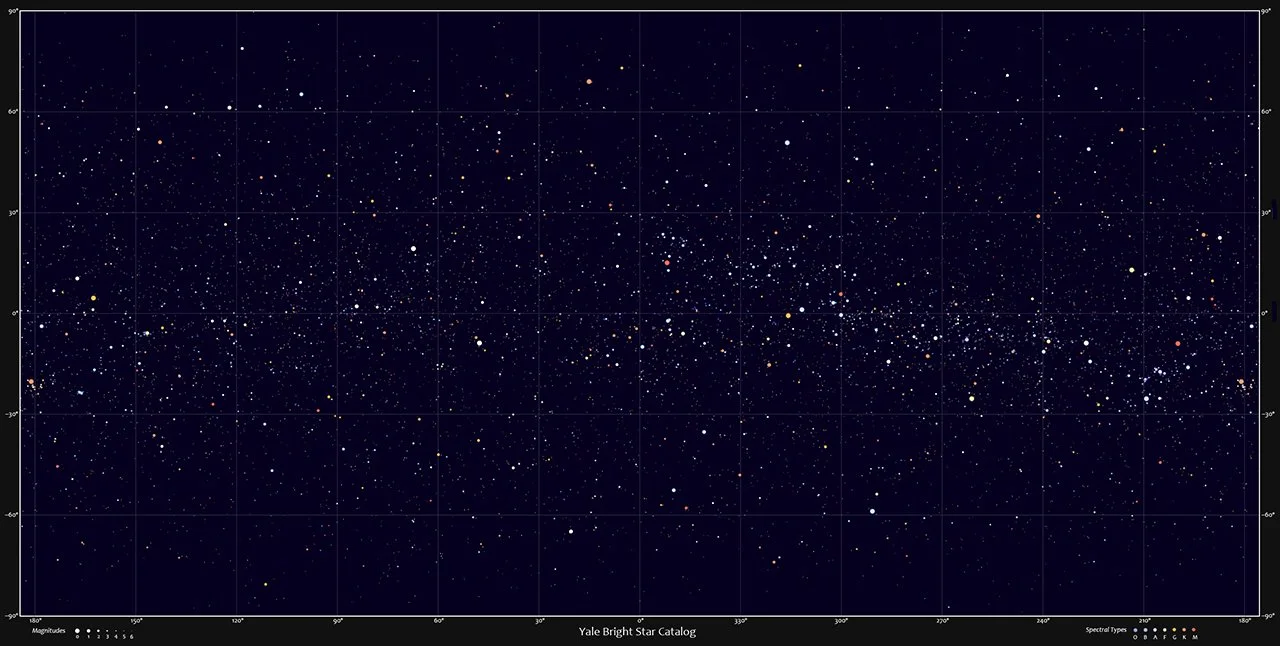
Our simulator includes an astronomically accurate celestial system that reproduces the night sky according to the simulated geographical location, date and time. Stars and other celestial bodies appear in their correct positions, providing realistic conditions for night-time navigation and celestial observation.
The underlying astronomical model accounts for factors such as the Earth’s axial tilt, precession and the movement of celestial bodies. This allows the simulated sky to change naturally with location and time, closely reflecting real-world celestial conditions.
The result is a realistic night-time environment that supports training in visual orientation and celestial navigation, adding another layer of accuracy and realism to maritime training scenarios.
Vessel configurator
Our Vessel Configurator enables users to tailor base models from the Morild vessel database to specific operational and training requirements. Propulsion and steering systems, vessel characteristics, loading condition, bridge equipment configuration and bridge layout can all be configured for different use cases.
Capture from simulator, click to enlarge
Unlike systems based primarily on fixed manoeuvring models, Morild's hydrodynamic and propulsion modelling has been designed to respond dynamically to changes in vessel configuration. A single vessel model can therefore be used to create a wide range of operational scenarios with different displacement, draft, trim, propulsion and steering configurations.
Vessel stability characteristics can also be adjusted, including the vertical distance from keel to center of gravity (KG), allowing changes in roll behavior and vessel response to be represented within the simulation.
This means that users are not limited to one predefined operating condition for a vessel. The same vessel can be configured to represent different loading conditions and operational setups, significantly increasing the range of training scenarios that can be created from each vessel model.
Individual vessel models are verified against available sea-trial data to ensure accurate and realistic behaviour. We also work with highly experienced seafarers and maritime professionals who contribute operational verification, testing and feedback.
Our vessel database includes a wide range of vessel types and is continuously expanded with new models. All existing and newly added vessel models are included as part of the license subscription.
Capture from simulator, click to enlarge
Location geo-database system
Capture from simulator, click to enlarge
Our fully automated, dynamic geodatabase system generates high-detail, geographically accurate training environments from the best available geospatial data for each location, using our proprietary in-house developed algorithms. This provides the spatial accuracy required for realistic navigation and ship-handling exercises, while reducing the need for extensive manual environment creation.
As source data is updated, environments can be regenerated to reflect changes in navigational infrastructure, bathymetry and port infrastructure - keeping training locations current and operationally relevant over time.
The system is designed to evolve with improvements in available source data and computer-graphics technology, allowing existing locations to increase in detail, accuracy and visual fidelity over time without having to be rebuilt from scratch.
Scenario builder & instructor station
Click image above to enlarge
A key advantage of Morild Builder is the ability to create reusable training environments that can be adapted to different crews, vessels and competence levels. An instructor can start with an existing scenario and quickly modify vessel traffic, environmental conditions, starting positions or other parameters to create new variations of the same exercise. This makes it possible to progressively increase difficulty, repeat specific situations and build structured training programs around defined learning objectives.
Scenarios can also be prepared in advance and shared between instructors or locations, helping organisations maintain a consistent approach to simulator training across different teams. At the same time, instructors retain the flexibility to intervene during a live exercise and adapt the scenario as it develops, allowing training to respond dynamically to participant decisions and performance.
Click here to explore Morild Builder.
Key features & functionalities
Full-Mission Bridge Simulation
Professional ship-handling, navigation and bridge-operation training in a fully interactive virtual environment
Advanced Dynamic Vessel Physics
Hydrodynamic behavior responds dynamically to vessel condition, including displacement, draft and trim
High-Fidelity Real-Time Visualization
Detailed maritime environments and vessel models designed for realistic visual representation at both near and far distances
Fully Virtualized Bridge
Bridge displays, controls and equipment are operated directly in VR, enabling flexible vessel-specific bridge layouts and configurations
Integrated Bridge Applications
Virtual ECDIS, ARPA Radar, Conning and AUX applications designed in accordance with OpenBridge design guidelines
Vessel-Adaptive Conning System
Conning displays are automatically configured according to the vessel and propulsion-system setup
Multi-Vessel Scenarios
Supports complex exercises involving multiple independently operated vessels and participants
Interactive VR Avatars
Participants can see and interact with other users inside the shared virtual training environment
Dynamic Geospatial Environments
Training locations are generated from high-quality geospatial data to provide detailed and geographically accurate environments
Accurate Night-Sky Simulation
Astronomical modelling reproduces celestial conditions according to geographical location, date and time for realistic night-time navigation
Click image above to enlarge
Benefits
Train wherever your crew is
deploy simulator training in-house, onboard or at other suitable locations
Reduce travel and lodging costs
bring the simulator to the participants rather than sending participants to a simulator center
Reduce infrastructure and complexity
eliminate much of the dedicated hardware, display systems and physical bridge equipment associated with conventional simulators
Increase training capacity
easier access to the simulator makes more frequent training and training of more personnel practical
Connect participants and instructors across locations
conduct collaborative training without requiring everyone to be physically co-located
Adapt training to your vessels
virtual bridge layouts, equipment and propulsion configurations can be tailored to different vessel types
Keep training environments current and relevant
data-driven environments and navigational infrastructure can be regenerated as improved or updated source data becomes available
Scale training across your organization
support anything from individual sessions to complex multi-user, multi-vessel exercises
Click image above to enlarge
Images from the simulator
Below are images captured directly from the Morild simulator system. Our real-time visualization system uses advanced rendering technology to achieve highly detailed, photorealistic maritime environments. This level of visual fidelity contributes to immersion and helps create a convincing and realistic training environment for the user.
Click on images above to enlarge